
For those within the fleet industry, there is an exciting inflection point where fleet management is experiencing a profound transformation, and at the center of this evolution lies Artificial Intelligence (AI). As technology has continued to advance, it has made way for fleets to harness technology that was once never accessible to us.
No longer do fleets have to rely solely on manual processes led by intuition and heavy paper trails to oversee a fleet; today, AI is providing fleet managers with powerful tools to optimize their entire operations, and arguably the most impactful place to start with AI is within fleet maintenance. AI is emerging as a game-changer for fleet managers worldwide and now is the time to harness it.
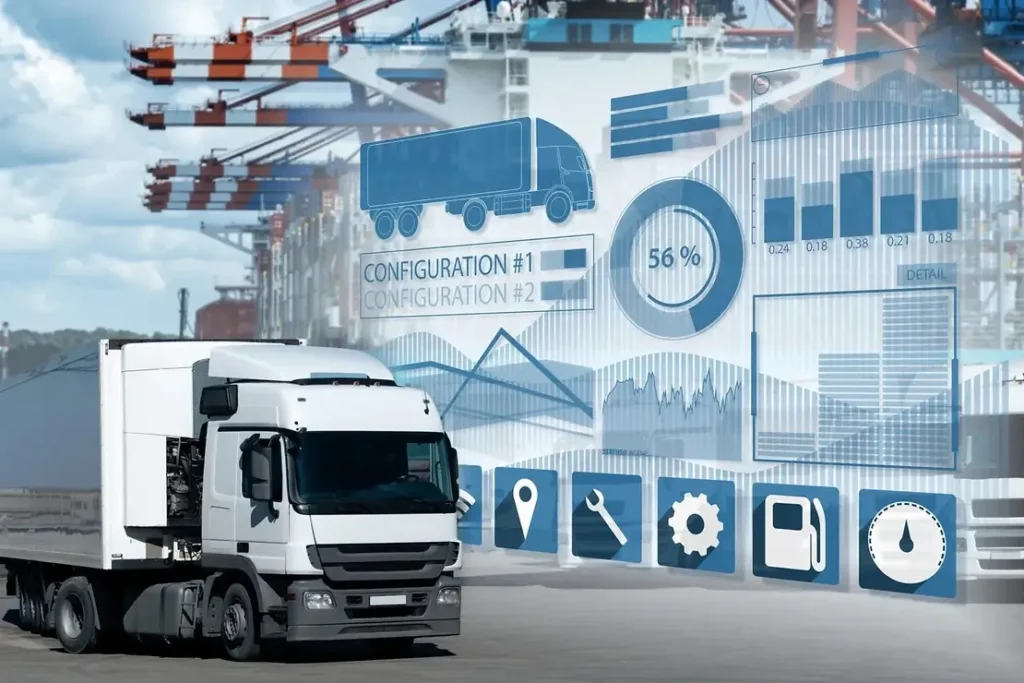
Fleets that couple artificial intelligence with their maintenance workflow can lead to increased safety, reduced costs, and achieving unprecedented levels of efficiency. Here are the 3 core advantages of AI in fleet maintenance:
1. The Power of Data
Today, many fleets face the common and growing challenge of data overload. From the introduction of telematics and technology, hardware such as dashcams, vehicle data has seen overwhelming growth. That’s why the core of AI’s impact on fleet maintenance is its ability to digest the vast amounts of data generated by vehicles and operational processes. AI fleet software can collect, process, and analyze this data in real time, providing fleet managers with invaluable insights into their operations. Whether monitoring vehicle health or analyzing digital work orders and scheduling, AI can transform raw data into actionable intelligence, enabling more informed and efficient decision-making.
Did you know across a fleet of 300 vehicles, there is an average of 7200 alerts received per day. Of course, that vast amount of data is far too large and intimidating to manually sift through, despite many knowing that there is significant value in harnessing vehicle data to avoid accidents, unplanned downtime or other general disruptions and expenses to the fleet operations. If a fleet manager were to review each individual alert to find the critical ones, it would take him or her on average 37.5 hours. AI-driven fleet maintenance solutions analyze that amount of data in 6 minutes, providing information that would have previously been overlooked due to the expansive amount.
2. ChatGPT for Fleets
For many, 2023 will be the year remembered for ChatGPT. The hype is real with the tool that can save writers, businesses, and individuals hours in a day by simply typing in a query or question into the search bar. ‘Rewrite this email to be more professional,’ ‘what are some tips to overcome XYZ?’ The various ways we can utilize ChatGPT are endless. But now, fleet managers can specifically harness ChatGPT within predictive maintenance software. Once overwhelming and confusing, fault codes get simplified with easy-to-understand and act-upon definitions generated by ChatGPT. When a fleet’s internal database (from telematics, OEM, etc.) lacks a description for a specific fault code, ChatGPT steps in to provide the missing information and definition, enabling quicker and more informed decision-making. With ChatGPT-Powered Fault Code Descriptions fleet managers, technicians and drivers gain access to comprehensive code descriptions, significantly improving their ability to diagnose and resolve vehicle issues promptly. Making remote diagnostic effortless and efficient, ensuring you stay ahead of the curve in optimizing your fleet’s performance.
3. Predictive Maintenance
One of the most significant advantages AI offers fleet managers is predictive maintenance. It’s like looking into an accurate, technology-driven crystal ball, where AI algorithms analyze vehicle data, such as engine performance, sensor readings, and historical maintenance records, to predict when components are likely to fail. In a recent study with over 200 fleet professionals, DPF failure was the number one cause of vehicle breakdowns. Imagine having the ability to predict when a derate would occur, weeks in advance? That is predictive maintenance. This proactive approach makes static preventive maintenance outdated, where over-maintenance of healthy vehicles is common, leading to unnecessary expenses and downtime spent in the shop. Now, AI allows fleet managers to schedule maintenance and repairs before a breakdown occurs. When coupled with predictive insights, traditional PM schedules become dynamic, allowing the full use of current resources to a fleet’s most efficient level, reducing downtime, and minimizing maintenance costs.
Supercharging Rather Than Replacing Humans
In an argument against AI, many worry that it will replace their roles within the organization, so it is important to highlight that AI is only beneficial if there are users to harness it. That means it will never replace fleet managers but instead empower them. By automating redundant tasks and pushing out actionable insights, AI frees up significant time for fleet managers to focus on more valuable “human” tasks such as team and customer engagement, strategic planning, and more. At a maintenance level, with descriptive and predictive alerts, AI gives technicians superpowers, saving 3+ hours of diagnostic time per event.
This directly puts time back in technicians’ hands to fix the problems rather than just find them. The idea is that AI should complement human expertise, boosting fleet managers as well as technicians to be their most effective. Fleet managers who embrace AI will find themselves at the forefront of innovation, equipped with the tools to navigate the challenges and opportunities of the future. The road ahead is paved with data-driven insights, optimized operations, and a brighter, more sustainable future for fleet management.
Smarter Management of Fleets
- Right-size the ratio of internal combustion engine (ICE) vehicles to electric and other green vehicles based on fleet usage and deployments.
- Reduce speeding, idling, and bad driver behaviors that waste energy.
- Purchase cleaner vehicles that are more fuel efficient and possibly of a lower size category that can still handle a particular fleet role or duty cycle.
- Identify underused vehicles and either redeploy or sell them. Establish detailed fleet vehicle replacement policies and aggressively cut unused vehicles since they are likely to yield surplus revenue for the operation from being sold off.
- Amid accelerating regulations, understand the state and performance of a fleet and how well it’s operating to better inform a knowledge base for the best vehicle replacements.
- Manage fleet on a unified technology system with a common dashboard. Integrate information into one database for all metrics and stats, such as tolls, fuel usage, maintenance schedules, violations, etc.
Fleet Electrification and Sustainable Fleets
- With California as the epicenter of fleet electrification, fleets are taking steps to reduce carbon emissions, whether under internal corporate mandates or the regulations issued by state and local governments.
- Develop a climate action plan framework with specific policies and strategic plans for a fleet. Those should explain how to time vehicle replacements, assess the climate impacts of vehicles, give fleet managers the authority to choose vehicles, and consider hybrids as viable transitional vehicles to electric ones.
- Assess the challenges of EV Charging infrastructure, regulations, technician hiring and training, and the need for a unified approach to electrification within a fleet organization.
- Create a clear process for identifying funding sources for EVs and infrastructure and establish procedures for pursuing grants, incentives, rebates, and funds. Fleet managers need to understand the details involved.
- Look for temporary battery storage for an EV fleet as a backup to primary power sources. Every fleet must be able to continue operations in the event of a grid power failure.
- Assemble a matrix of contacts for every aspect of fleet electrification, such as real estate, project leaders, engineers, utility officials, liaisons, etc. Build relationships and coordinate meetings and interactions to coordinate and communicate on electrification plans.
- When centering and standardizing fleet electrification plans and fleet service packages, fleet operators should put together a team of internal stakeholders from past acquisitions who have experience with the process of vetting and acquiring vehicles. All stakeholders must “level set” at the start of an electrification project to encourage compromise, respect for different opinions, and open-mindedness to the unique needs of a fleet.
Fleet Staffing for the Long-Term using AI
- To keep an operation stable and thriving, develop a succession plan for fleet managers who should be mentored and trained in AI way of working.
- Enable fleet technicians to get certifications and expand their repertoire of expertise in AI. Learn the best practices and approaches to training and preparation programs.
- Enlist help from the local fire department when training EV technicians and setting up safe maintenance routines for EVs.
- Offer fleet staff paths for professional development and training for other positions. Make staff feel appreciated so they stay, and the operation can minimize turnover. Look for new technicians to train and teach. Treat staff like family, and through best safety practices, make sure they get home to their families.
Putting Fleet Safety First
- Institute a rigorous and vigilant safety culture, possibly through a division with a full-time manager or leader who can establish standard operating procedures, safety programs, and telematics-based training and education.
- Eliminate mobile phone use while driving. Consider having drivers put their phones into a lock box while driving where the phone can charge or set up tech-blocking of cell phone use inside vehicles. Most accidents are caused by distracted drivers dropping their phones or taking a call.
- Telematics leads to success in a fleet operation. Use cameras in vehicles to document driving performance and ensure safety compliance.
Future Fleet Advances
- Although autonomous vehicles are progressing on a longer timeline than expected, track the latest developments that could eventually yield a way for a vehicle to travel on its own to and from service centers saving time in a fleet operation.
- Identify potential technology advancements, especially those funded by OEMs, that can lead to more fleet efficiencies. AI will enhance vehicle connectivity along with onboard tech amenities and functions.
- Charging infrastructure will advance in numerous ways in coming years, drawing on out-of-box solutions and improving technologies such as wireless street charging and more solar power sources.
Key questions for AI Driven Fleet management
1. Figuring out what vehicles to put into your fleet.
2. How much power you will need.
3. How to manage EV fleet charging.
In choosing the right EVs to replace ICE vehicles, a fleet manager must get answers to the following questions:
- What electric vehicle can do the same job as the ICE one?
- What are the battery sizes on those models?
- What’s the efficiency?
- What is the maximum the vehicle or piece of equipment will charge on a Level 2 versus a Level 3 charger?
- Where does the EV stay at night and what is the dwell time?
- Do you know if you have enough time to put energy back into the battery storage system and what type of charger is required?
- How many kilowatts are we going to need every day?
Fleet managers should look at electricity as the new fuel, except the energy measurements vary greatly from those of liquid fuels, EV math is something special. It must factor in battery capacity and the proposed efficiency from the OEM. Just like the EPA mileage, don’t expect you’re ever going to get what the OEM tells you. So, you need to look at efficiency and how many kilowatts you think you will need.
Fleet operations are using data for predictive maintenance and figuring out the best times and places for a fleet vehicle to be fueled, routed, and deployed. Fleet vehicles also will accumulate enough data for every stage of their lifecycle, which can inform condition reports, performance and usage, wear and tear, and repair intervals. Fleets are looking for ways to learn how long to keep vehicles and when to sell the vehicle. Data that we collect to help fleets make decisions at the end of that fleet vehicle’s lifecycle or use case.
Telematics is spurring the gathering of data as more platforms integrate and share APIs enabling fleet management companies to manage and track vehicle inventory. Such closer insights enable fleet operations to monitor vehicles at every minute.
Data can also anticipate future parts and equipment replacements, thereby staying ahead of the supply chain and streamlining maintenance intervals.
Connections to VINs also create more transparency for each vehicle, which is crucial to electric vehicles and their charging rhythms and range capacities. Being able to track EV battery status helps fleets manage electrification.
AI Can Boost Vehicle Financing, Planning, and Turnover
As data technology can speed up the handling of fleet vehicles, it also plays a larger role in acquiring them. AI has enabled lenders to fully automate approval processes that find the best interest loan rates based on FICO scores and credit rating. Instead of having an individual underwriter looking at the information, AI remembers all the different trade lines and open lines of credit for consumers, and then compares it to others. The technology can determine rates and the length of loans within seconds while vetting approvals. It reduces the human element out of the approval process. That means underwriters are only needed for those loan situations involving questions about a buyer’s credit worthiness or past delinquencies. Such a micro-focusing on financing applies to fleet vehicle purchases as much as retail. The technology can determine if fleet vehicle purchases qualify for upgraded makes and models based on data. It now becomes proactive for banks and lenders to upgrade customers into newer loans. They are remarketing to fleet owners in real time with trade-in/resale values, helping determine the best times to take advantage of incentives for loans. By combing depreciation, resale, and trade-in values, the program can monitor fleet vehicles to figure out turnover and replacement rates.
AI can pinpoint down to a fleet operator and know how often they buy vehicles. It’s AI mining database for the lender. It becomes fully automated. It can notice (for example) that you trade in and upgrade vehicles every three to four years.
A good AI Model can receive and processes buyer information in real time based on lender financing options, VINs, vehicle makes and models, zip codes, selling prices, MSRPs, and credit scores. AI is always mining the database for diamonds.
AI is already here but now the problem is not many know how to use it across all the mediums from approvals to remarketing. You have remarketing companies not integrated with others along the transaction chain.
Lenders and remarketers need to work together as one instead of independently thereby avoiding the time-consuming process of filling out and sending forms online.
From a macro view remarketing in the fleet world is not an “Amazon experience”, it’s not personalized, unified, and most of the time it’s not relevant. In the auto industry and fleet business, it’s very fragmented. It’s like hiring different companies for different functions.
Key AI Use Cases that are driving future Fleet management innovation:
· AI can determine if fleet vehicle purchases qualify for upgraded makes and models based on data. It now becomes proactive for banks and lenders to upgrade customers into newer loans. They are remarketing to fleet owners in real time with trade-in/resale values helping determine the best times to take advantage of incentives for loans
· By combing depreciation, resale, and trade-in values, the program can monitor fleet vehicles to figure out turnover and replacement rates
· In the commercial space, auctions still do not spend enough time and attention on thoroughly valuing commercial medium- to heavy-duty vehicles. Auctions could improve how they intake commercial vehicles from fleets and identify what they are, their conditions, and maximum values. They may turn them quickly but that’s different than maximizing the values.
· The supply chain of upfitted vehicles is still opaque and fragmented. The commercial fleet industry needs to collaborate more on data to see what kind of upfits have what type of value, and how to parse out the value based on condition.
· There is a need to recognize the differences between automobiles, trucks, and upfitted vehicles, and see what is unique about an upfitted vehicle. How are you reaching interested customers for that type of vehicle? Today if you are good at finding those types of vehicles at auctions you will get good deals.
· AI and machine learning can make the vehicle inspection process not only more consistent, but a lot faster than what a human could do. It can generate accurate inspection reports from exterior and interior videos of fleet in seconds based on trained images of thousands of vehicles and scan VIN.
The opportunities that AI brings into fleet management are not merely a trend; it represents a seismic shift toward a more efficient, data-driven future. As fleets increasingly adopt AI technologies, the advantages become clear: enhanced decision-making through data analysis, simplified processes with tools like ChatGPT, and the proactive approach of predictive maintenance. These innovations not only streamline operations but also empower fleet managers and technicians to perform at their best, focusing on strategic and human-centered tasks that drive success.
As we move forward, the challenge lies not in the technology itself but in the willingness of fleet professionals to embrace this transformation. By leveraging AI as a partner in their operations, fleet managers can unlock unprecedented levels of performance, safety, and sustainability. The future of fleet management is bright, and those who adapt and innovate will lead the charge toward a more efficient and responsible industry. Embrace the change, harness the power of AI, and set your fleet on a path to thrive in the evolving landscape of transportation management.
Aifiniti.ai offers a wide range of services tailored to help businesses harness the power of AI, including AI Strategy Development, Data Strategy and Governance, AI Solution Implementation, Custom AI Model Development, AI Education, and Seamless Integration with Workflows. What sets Aifiniti.ai apart is its commitment to delivering personalized and effective AI solutions that meet the unique needs of each client. One of the key features of Aifiniti.ai’s website is its dedicated section for customer success stories and testimonials. These real-world examples showcase how organizations across various industries have benefited from implementing AI solutions from Aifiniti.ai. From increased operational efficiency to enhanced customer engagement, these stories highlight the tangible impact that AI can have on businesses of all sizes. In addition to customer success stories, Aifiniti.ai’s website also features an integrated blog that provides valuable insights and industry trends related to AI. Whether you’re looking to learn more about the latest advancements in AI technology or how AI can drive business growth, the blog is a must-read resource for business leaders and decision-makers. Moreover, Aifiniti.ai’s website includes a portfolio page that showcases some of the customized AI solutions the company has developed for its clients. These case studies offer a glimpse into the diverse applications of AI across industries such as e-commerce, healthcare, finance, and more. By highlighting these success stories, Aifiniti.ai demonstrates its expertise in delivering tailored AI solutions that yield measurable results. Lastly, Aifiniti.ai’s website features a seamless customer support interface, ensuring that clients receive ongoing assistance and guidance throughout their AI journey. Whether you have a question about AI implementation or need technical support, the customer support team at Aifiniti.ai is dedicated to helping you succeed. In conclusion, Aifiniti.ai is a trusted partner for businesses looking to unlock the full potential of AI and data strategies. Through its customer success stories, informative blog, portfolio of customized AI solutions, and dedicated customer support, Aifiniti.ai stands out as a valuable resource for organizations seeking to thrive in the age of AI.